Best Face Primer and Foundation: How to Choose for Your Skin Type
KNK Awadh Salon & Academy
Senior Editorial & Salon Master Stylists, Awadh
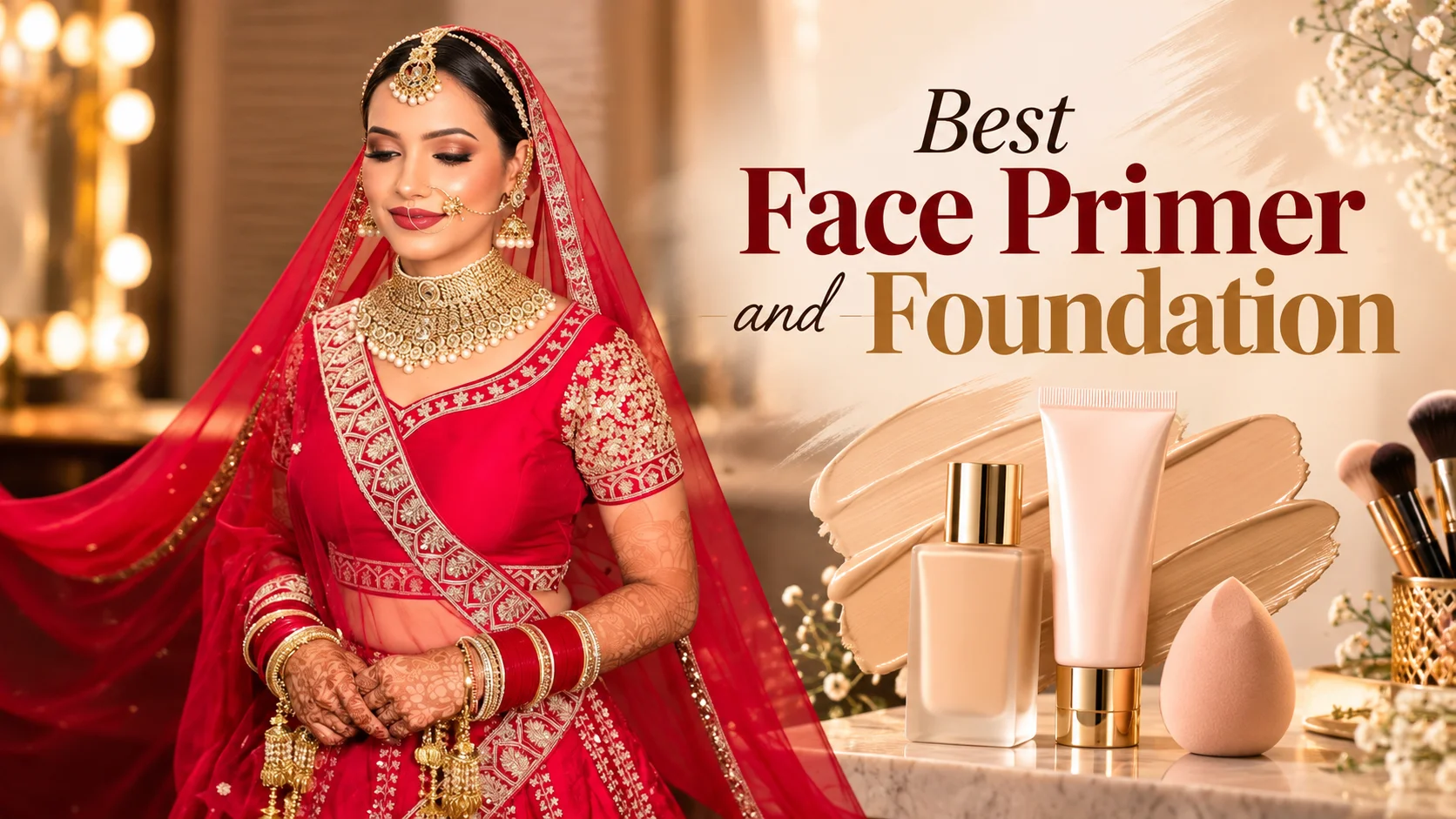
Choosing the best face primer and foundation can make a significant difference to how your makeup looks and feels. The right combination can help create a smoother-looking base, provide the coverage you prefer and complement your skin type, complexion and occasion. However, not every primer or foundation works equally well for everyone.
Whether you are preparing for everyday makeup, a party, an engagement or a wedding, understanding your skin type, foundation shade, desired finish and application technique can help you make a more informed choice.
At KNK Awadh Salon & Academy in Lucknow, makeup preparation is an important part of creating an occasion-ready look. This guide explains how to choose a primer and foundation, how to apply them in the correct order, and how to avoid common makeup-base problems.
Quick Answer: Which Face Primer and Foundation Should You Choose?
The best face primer and foundation depend on your skin type, preferred finish, coverage requirements and the occasion.
-
Oily skin: Consider a lightweight, mattifying primer and a foundation that provides your preferred coverage without feeling heavy.
-
Dry skin: Start with suitable moisturising skincare and consider a hydrating foundation that does not emphasise dry patches.
-
Combination skin: Choose products that suit your skin's different areas; you may prefer shine control around the T-zone and more hydration on dry areas.
-
Sensitive skin: Look for products that suit your individual sensitivities, check ingredient lists and patch-test according to the product instructions.
-
Natural everyday makeup: Consider lightweight formulas and build coverage gradually.
-
Bridal and occasion makeup: Test the complete makeup combination beforehand and consider the event duration, lighting, photography and weather.
The best result is not necessarily the most expensive product or the fullest coverage. It is a combination that suits your skin, looks appropriate in different lighting and feels comfortable to wear.
1. What Is the Difference Between Primer and Foundation?
Primer and foundation serve different purposes in a makeup routine. Understanding the difference helps you decide which products you need.
What is a face primer?
A face primer is a makeup product generally applied after skincare and before foundation. Depending on its formulation, it may help reduce the appearance of pores, create a smoother-looking surface, manage visible shine or provide additional hydration.
Different primers are designed for different preferences. Mattifying primers may suit people who want to manage shine, while hydrating primers may be more suitable for skin that feels dry.
A primer is optional. You may not need one for every makeup look, particularly if your skincare and foundation already work well together.
What is foundation?
Foundation is used to even out the appearance of skin tone and provide coverage. Depending on the formula, it can offer sheer, light, medium or full coverage with a matte, natural, satin or dewy finish.
The right foundation should complement your skin tone rather than make your complexion appear noticeably lighter or darker.
Primer vs foundation: key differences
| Feature | Face primer | Foundation |
|---|---|---|
| Main purpose | Prepares the skin for makeup | Provides coverage and evens the appearance of skin tone |
| Typical application | After skincare, before foundation | After primer, when using one |
| Main selection factor | Skin needs and desired base effect | Shade, coverage, finish and skin type |
| Common options | Mattifying, hydrating, smoothing | Matte, natural, dewy, sheer, medium or full coverage |
| Is it essential? | No | Optional, depending on the look you want |
Key takeaway: Primer prepares the base, while foundation provides coverage. Both should be selected according to your needs rather than automatically buying products from the same range.
2. How to Choose the Best Face Primer for Your Skin Type
The best face primer is one that works with your skin and the foundation you plan to apply. Consider how your skin feels throughout the day, rather than relying only on whether it looks shiny immediately after cleansing.
Best primer for oily skin
If your skin becomes shiny during the day, a lightweight mattifying primer may help manage visible oiliness and create a more balanced-looking base.
When choosing a primer for oily skin:
-
Consider a lightweight formula that feels comfortable.
-
Look for a mattifying finish if shine is your main concern.
-
Consider a pore-blurring primer if you want to soften the appearance of visible pores.
-
Avoid applying excessive amounts, especially over areas where makeup tends to separate.
-
Test the primer with your chosen foundation before an important event.
A mattifying primer does not eliminate oil production or guarantee that makeup will remain unchanged throughout the day. Results depend on the formulation, skin and conditions.
Best primer for dry skin
Dry skin may benefit from a hydrating primer, although moisturising skincare is still an important first step.
Look for a primer that layers comfortably over your moisturiser and does not make your skin feel tight. Avoid applying too many products at once, as heavy or incompatible layers may affect how foundation sits on the skin.
For a smoother-looking base, allow your skincare to settle before applying primer and foundation.
Best primer for combination skin
Combination skin can feel oily around the forehead, nose and chin while feeling normal or dry elsewhere.
You can try a lightweight primer across the face or apply different compatible primers to specific areas according to your needs. For example, a mattifying formula may suit the T-zone, while a hydrating formula may be more comfortable on dry areas.
Use small amounts and blend the edges carefully to avoid an uneven finish.
Best primer for sensitive skin
If your skin is sensitive, check the ingredient list and choose products that suit your known sensitivities. Fragrance-free products may be worth considering if fragrance is a trigger for you, but no product is guaranteed to suit everyone.
Patch-test according to the product instructions before use, particularly before a wedding or important occasion. Stop using a product if it causes irritation.
Best primer for visible pores and uneven texture
Smoothing or pore-blurring primers may help reduce the appearance of pores and surface texture temporarily. They do not permanently shrink pores or change the underlying structure of the skin.
Use a small amount and follow the product instructions. Too much primer can sometimes cause foundation to slip, pill or look uneven.
3. How to Choose the Best Foundation for Your Skin Type
Foundation selection involves more than choosing a popular product. Consider your skin type, coverage preference, shade, undertone and the environment in which you will wear it.
Best foundation for oily skin
For oily skin, consider a lightweight foundation with a natural or matte finish, depending on your preference. A formula designed for longer wear may be useful for events, but its performance should be tested on your own skin.
Helpful tips:
-
Apply a thin layer and build coverage only where needed.
-
Allow skincare and primer to settle before applying foundation.
-
Blend carefully around the nose, chin and forehead.
-
Use a small amount of setting powder if you want to reduce visible shine.
-
Carry out a wear test before relying on the product for a long event.
Best foundation for dry skin
For dry skin, a hydrating or moisturising foundation may provide a more comfortable finish. Skin preparation is particularly important if you experience flaky or rough patches.
Before applying foundation:
-
Cleanse gently.
-
Apply a suitable moisturiser.
-
Allow the moisturiser to settle.
-
Apply primer if needed.
-
Blend foundation in thin layers.
A very matte or heavy foundation can sometimes emphasise dry areas. If that happens, try a different finish or adjust your skin preparation rather than repeatedly adding more product.
Best foundation for combination skin
A foundation with a natural or satin finish may be a useful starting point for combination skin, but individual preferences vary.
You can apply a thin layer across the face and add coverage only where needed. If some areas become shiny, use powder selectively instead of applying a heavy layer across the entire face.
Best foundation for sensitive or acne-prone skin
If your skin is sensitive or acne-prone, consider products labelled non-comedogenic where appropriate, but remember that these labels cannot guarantee that a product will not cause a reaction or breakout.
Check the ingredient list, avoid known triggers and remove makeup gently at the end of the day. Persistent irritation or acne concerns should be discussed with a qualified healthcare professional.
Best foundation for mature skin
If you prefer a natural-looking finish, consider a foundation that feels comfortable and can be applied in thin layers. Excessive product may settle into fine lines or emphasise texture.
Moisturising skincare, careful blending and selecting a suitable coverage level can help create a balanced finish. The ideal formula depends on your skin and personal preference.
4. How to Choose the Right Foundation Shade for Indian Skin Tones
Finding the right foundation shade is one of the most important steps in creating a natural-looking makeup base. A foundation that is too light, too dark or mismatched to your undertone can look different from the rest of your complexion.
Understand skin tone and undertone
Skin tone refers broadly to the depth of your complexion, while undertone describes the subtle underlying hue.
Undertones are commonly described as:
-
Warm: Often associated with golden, yellow or peach-like undertones.
-
Cool: Often associated with pink, rosy or bluish undertones.
-
Neutral: A balance of warm and cool characteristics.
These descriptions are guidelines rather than strict rules. Skin tone and undertone cannot always be identified reliably from a single photograph or a wrist-vein test.
How to test a foundation shade
Follow these steps when choosing a foundation:
-
Select a few shades that appear close to your complexion.
-
Apply small swatches along the jawline rather than relying only on hand swatches.
-
Check the shades in natural daylight when practical.
-
Compare how the foundation blends into both the face and neck.
-
Allow time for the product to settle and check whether its colour changes.
-
Choose the closest match rather than a shade intended to make your skin appear lighter.
For medium, deep or dusky Indian skin tones, pay attention to both shade depth and undertone. A shade may have the right depth but still appear too orange, pink or ashy if its undertone is unsuitable.
What is foundation oxidation?
Foundation oxidation refers to a noticeable change in the product's appearance or colour after application. The effect can vary by formulation, skin conditions and other products used underneath.
If you suspect oxidation, test the foundation over several hours before purchasing it for an important event. Do not assume that every foundation will oxidise or that the same product will change colour on every person.
5. How to Apply Primer and Foundation in the Correct Order
Applying products in a suitable order and using thin layers can help create a more even makeup base.
Step 1: Cleanse your skin
Begin with clean skin. Choose a cleanser appropriate for your skin type and avoid aggressive scrubbing immediately before applying makeup.
Step 2: Apply moisturiser
Use a moisturiser that suits your skin. Even oily skin may benefit from appropriate hydration. Allow the product to settle before layering makeup.
Step 3: Apply sunscreen for daytime makeup
For daytime makeup, apply broad-spectrum sunscreen according to its instructions. Allow it to settle before continuing with makeup, and follow the sunscreen label regarding application and reapplication.
Primer and foundation should not be treated as substitutes for sunscreen.
Step 4: Apply primer if needed
Use a small amount and concentrate on areas where you want its particular effect, such as visible shine or texture. Follow the product instructions and allow it to settle before applying foundation.
Step 5: Apply foundation
Use a clean brush, makeup sponge or your preferred application method. Begin with a small amount and blend evenly. Build coverage gradually rather than applying a thick layer immediately.
Step 6: Conceal where needed
If you use concealer, apply it where additional coverage is desired and blend the edges carefully.
Step 7: Set your makeup if appropriate
A light application of setting powder can help reduce visible shine in selected areas. Setting spray may also be used according to its instructions and your preferred finish.
Application order at a glance:
Cleanser → Moisturiser → Sunscreen for daytime → Primer if needed → Foundation → Concealer if needed → Powder or setting spray if desired.
6. Water-Based vs Silicone-Based Primer and Foundation
You may have heard that primer and foundation must always have the same base. In practice, the compatibility of two products depends on their full formulations and how they are layered.
Water-based products may have a lighter feel, while silicone-containing products may help create a smoother-looking finish. However, a product's overall performance cannot be determined by one ingredient category alone.
If your foundation pills, separates or appears patchy:
-
Check the instructions for each product.
-
Allow skincare and each makeup layer to settle.
-
Use smaller amounts of primer and foundation.
-
Avoid rubbing repeatedly over layers that have already begun to set.
-
Test the combination before an important event.
-
Try an alternative combination if the problem persists.
Do not assume that all water-based and silicone-based products are incompatible. The actual formula and application technique matter.
7. How to Make Foundation Last Longer in Hot and Humid Weather
Hot weather, humidity, sweat and natural oil can affect makeup wear. If you are preparing for an outdoor function, daytime wedding or long event in Lucknow, test your makeup routine in advance.
Try these practical tips:
-
Start with suitable skincare rather than applying many heavy layers.
-
Choose a foundation finish that feels comfortable on your skin.
-
Apply foundation in thin, well-blended layers.
-
Use powder selectively if you want to manage shine.
-
Consider a setting spray if it suits your routine.
-
Avoid repeatedly adding foundation over sweat or excess oil.
-
Blot gently when needed instead of rubbing the face.
-
Carry essential touch-up products for longer events.
No primer or foundation can guarantee a completely sweat-proof or transfer-proof result in every condition. Performance depends on the product, application, skin and activity.
8. How to Avoid Cakey, Patchy or Separating Foundation
A foundation may look cakey when too much product is applied, when the skin is dry, or when layers do not sit well together. Patchiness and separation can have several causes.
Why does foundation look cakey?
Possible reasons include:
-
Applying too much foundation at once.
-
Using several heavy skincare and makeup layers.
-
Applying foundation over visible dry patches.
-
Choosing a finish that does not suit your skin's current condition.
-
Using too much powder.
-
Insufficient blending.
What to do: Start with suitable skincare, apply thin layers and build coverage gradually. If the foundation continues to look heavy, try a lighter application or a different formula.
Why does foundation separate?
Foundation may separate because of excess oil, sweat, incompatible layers or how the products are applied. There is no single explanation that applies to every case.
What to do: Test your skincare, primer and foundation together. Allow each layer to settle and use a smaller amount. If separation persists, change one product at a time so you can identify the combination that works better.
Why does foundation look flaky?
Foundation can emphasise flaky areas, particularly when the skin is dry or irritated.
What to do: Prepare your skin gently and use suitable moisturiser. Avoid harsh exfoliation immediately before an event. If the skin is persistently inflamed, painful or irritated, seek professional healthcare advice instead of attempting to cover the problem with additional makeup.
9. How to Choose Primer and Foundation for Bridal and Party Makeup
Bridal makeup often involves extended wear, professional photography, different lighting conditions and several hours of celebrations. The makeup base should complement the bride's preferred look and remain comfortable throughout the event.
For natural bridal makeup
Consider a natural or satin finish with coverage built gradually. The goal is to complement your complexion and preserve the look you prefer, rather than applying the maximum possible coverage.
For matte bridal makeup
A matte finish may suit someone who prefers reduced visible shine. Skin preparation and careful powder application remain important, particularly if the skin has dry areas.
For dewy bridal makeup
A dewy finish may create a luminous appearance. Choose products that suit your skin and avoid adding excessive layers, which may make the base feel heavy.
For HD and airbrush makeup
HD makeup and airbrush makeup involve different application approaches and product considerations. Neither is automatically better for every bride.
The appropriate technique depends on the desired finish, skin preparation, makeup artist's approach, event conditions and personal preference. A trial can help you assess the result before the wedding.
Read our related guide: HD Makeup vs Airbrush Makeup: Which Is Better for Brides?
Before an important event
-
Discuss your preferred coverage and finish.
-
Tell your makeup artist about known skin sensitivities.
-
Share inspiration images while remaining open to professional advice.
-
Test the makeup base in advance when practical.
-
Check how the finish looks in different lighting.
-
Confirm the appointment details and service requirements beforehand.
10. How to Choose the Best Makeup Base for Weddings and Events in Lucknow
Choosing primer and foundation for an event in Lucknow involves considering the season, venue, event duration, photography and your skin type.
For an outdoor daytime function, you may prefer a different finish and touch-up routine from an evening reception or indoor celebration. Rather than relying on a product's popularity alone, test the full combination under conditions similar to those expected at your event.
If you need professional help with bridal, engagement or party makeup, KNK Awadh Salon & Academy offers makeup services in Lucknow.
You can explore the available options here:
KNK has locations in Mahanagar, Gomti Nagar and Hazratganj. Contact the salon to discuss your event, preferred makeup look and appointment requirements.
11. Common Mistakes to Avoid When Buying Primer and Foundation
Before purchasing products, watch out for these common mistakes:
Choosing a product only because it is popular: A highly recommended product may not suit your skin type or desired finish.
Testing foundation only on your hand: Your hand may not match the colour of your face and neck.
Using too much primer: Excess product can sometimes affect how foundation sits on the skin.
Choosing a foundation that is too light: Foundation should complement your complexion rather than act as a skin-lightening product.
Ignoring skin preparation: Even a suitable foundation may emphasise dryness or texture if your skin preparation is inappropriate.
Expecting guaranteed all-day wear: Makeup performance varies with skin, weather, activity and product formulation.
Buying a complete set without testing: Primer, foundation and other products do not need to come from the same range if another combination works better for you.
Trying a new product just before a major event: Test unfamiliar products in advance, especially if you have known sensitivities.
Frequently Asked Questions
1. Which is the best face primer and foundation?
The best combination depends on your skin type, shade, desired coverage and finish. Oily skin may suit a lightweight mattifying primer, while dry skin may benefit from hydrating skincare and a suitable moisturising foundation. Test the combination before an important occasion.
2. Is primer necessary before foundation?
No. Primer is optional. It may help address specific concerns such as visible shine or texture, but you can apply foundation without primer if your skincare and foundation work well together.
3. Should primer be applied before or after foundation?
Primer is generally applied after skincare and before foundation. Allow your skincare to settle, apply primer if needed, and then blend foundation over it.
4. Which primer is best for oily skin?
A lightweight mattifying primer may suit people who want to reduce visible shine. Choose a formula that feels comfortable and test it with your foundation.
5. Which foundation is best for dry skin?
A hydrating or moisturising foundation may be a useful option. Prepare your skin with a suitable moisturiser and apply foundation in thin layers to help avoid emphasising dry patches.
6. How do I choose the right foundation shade for Indian skin?
Consider both the depth of your skin tone and your undertone. Test shades along the jawline, check them in natural light and compare the result with your face and neck.
7. Can I use primer without foundation?
Yes. Some primers can be worn alone if you like the finish they provide. The result depends on the product's formulation and your preferences.
8. Why does my foundation look cakey even after applying primer?
Primer cannot correct every issue caused by skincare, dryness, excessive product or incompatible layers. Try suitable moisturising skincare, apply less foundation, blend in thin layers and reassess the product combination.
9. How can I make foundation last longer in summer?
Use suitable skincare, apply thin layers, let each layer settle and consider powder or setting spray if appropriate. Carry out a wear test because heat, humidity, sweat and skin type can affect performance.
10. Which foundation finish is best for bridal makeup?
There is no single best finish for every bride. Matte, natural, satin and dewy finishes can all work depending on the bride's preference, skin preparation, photography and event conditions.
11. Should primer and foundation be from the same brand?
Not necessarily. Products from different brands can work together. Test the complete combination to check whether it blends well and feels comfortable.
12. Where can I get professional bridal makeup in Lucknow?
You can explore the available bridal makeup services at KNK Awadh Salon & Academy and contact the salon to discuss your requirements and appointment availability.
Conclusion
Choosing the best face primer and foundation is about finding products that complement your skin type, complexion, preferred finish and occasion. Start with suitable skincare, select a foundation shade carefully, use primer when it serves a purpose and apply makeup in thin layers.
For everyday makeup, a simple routine may be enough. For bridal and special-occasion makeup, testing the complete base in advance can help you make more confident choices.
If you are planning bridal, engagement or party makeup in Lucknow, explore the makeup services at KNK Awadh Salon & Academy and contact the team to discuss your preferred look.
Ready to plan your makeup look?
Explore Makeup Services · Explore Bridal Makeup · Contact KNK Awadh Salon & Academy
Ready for your personalized transformation?
Book a bespoke styling, skin glow, or bridal look with the creators behind this story.